
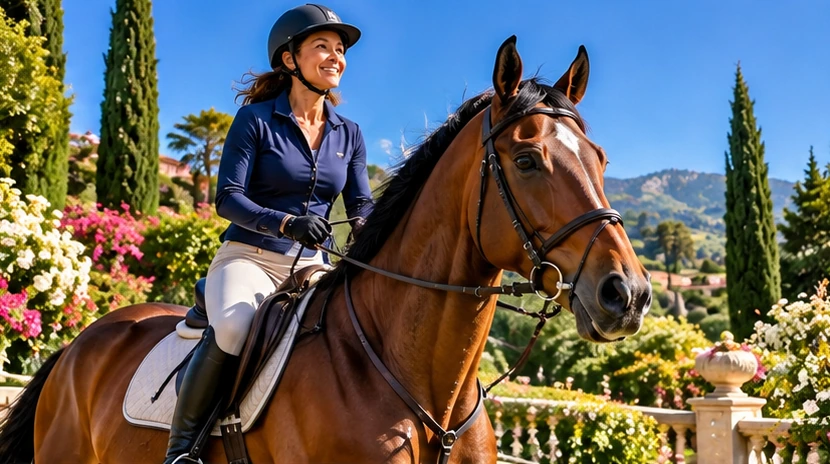
Horseback riding
Find your seat. Keep your sense of adventure.
The rhythm of a horse. The space of a trail. Partnership in motion, with a conversation that respects the stakes.
Illustrative scene with fictional people. About the artwork.
MOVEMENT STUDY / ILLUSTRATIVE
The object keeps its mass. Its momentum changes.
Distance changes apparent size. Speed changes momentum. The way an object or body slows down changes the force over time. This visual study is neither a treatment nor a personal injury-risk calculation.
Momentum: mass × velocity. Average force: change in momentum ÷ stopping time. Joint loads involve additional geometry and biology.
Read the deeper movement storyBalance is a shared task
Riding combines posture, grip and responses to another living mover. The demands change with discipline, duration, terrain and experience.
A fall changes the priority
After a fall, significant head, neck, back, hip or limb symptoms need timely trauma assessment. A future treatment discussion follows that assessment, rather than replacing it.
Return with a plan
Ask PrimeWave about any persistent diagnosed soft-tissue condition and the evidence behind available options. Return-to-riding decisions should involve the appropriate care professionals and the actual injury.
Sources & reading
Source check: 29 September 2026. Linked organisations are independent of PrimeWave. Research dates and device scope matter.
AAOS: sprains, strains and soft-tissue injuriesAcute trauma and overuse injuries are different clinical problems.
ISMST clinical guidelines, 2023 / posted 2024Professional guidance on physical principles, applications, contraindications and adverse effects. Guidance is distinct from US regulatory authorisation.
Human-faced humanoids, luminous equipment and fantasy settings are editorial illustrations. Activity scenes depict imagined possibilities, not treatment results or return-to-play instruction.